

June Burned Ones Review 17.07.2026 15:00 Ukrinform
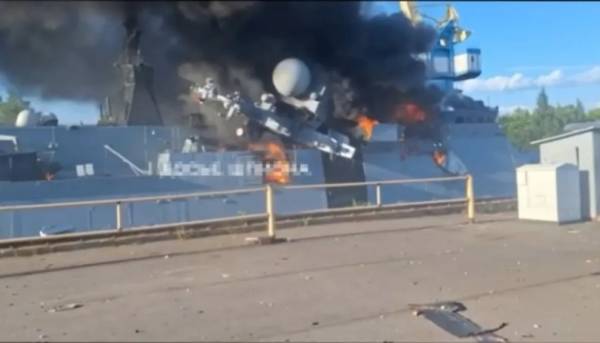
The Heaviest Losses of the Russian Army during the First Summer Month
In the first thirty days of summer, expensive elements of Russian military power traditionally came under the long-range strikes of the Defense Forces of Ukraine: anti-aircraft missile and radar systems, coastal radars, warships, airfields, logistics, fuel and energy infrastructure.
A distinctive feature of the month was the start of the resort season in Crimea, seized by the Russians. This year, it turned out to be peculiar for the occupiers – without baklava, shrimp, gasoline, and electricity. Instead, tourists from across the border received sleepless nights and explosive impressions from air raids without limit.
Throughout June, from Tarkhankut to Kerch, Ukrainian drones and missiles visited even those corners of the peninsula where the occupiers felt completely impunity until recently. This became possible thanks to the previous efforts of the Defense Forces. On July 4, the commander of the Unmanned Systems Forces, Robert Brovdi, reported on the titanic work of our defenders. According to him, since the beginning of the current year, 195 elements of Russian air defense have been eliminated, 32 of which “burned on the job” in June. A significant portion of these nearly two hundred units of “analog-free” air defense was supposed to protect the occupiers specifically in Crimea.
The Russians felt the hot breath of the Ukrainian summer’s start not only on the peninsula.
The Baltic Fleet somehow suddenly lost its peace in Kronstadt. The Sea of Azov, which the inhabitants of the swamps have called their own for five consecutive years, also suddenly ceased to be safe for their ships. And in Novorossiysk, where the remnants of the Black Sea Fleet cautiously anchored four hundred kilometers from the Ukrainian coast, the great-grandsons of the Tsushima survivors felt: distance no longer guarantees them safety.
Read about the June disposal of expensive Russian scrap metal in the next review by Ukrinform.
WARM-UP AT THE START
The “second army of the world” met the beginning of summer without much enthusiasm.
And no wonder. Already on the night of June 2, Ukrainian forces simultaneously struck several important military targets of the occupiers. The “Pantsir-S1” anti-aircraft missile and gun system near the village of Vydne in occupied Crimea, the “Neva-B” and “Neva-B2M” coastal radar stations in the Mariupol region, as well as a support vessel near Mezhvodne, not far from Cape Tarkhankut, were hit.
“Neva-B” (index 1RL133) is a mobile coastal radar station designed for continuous monitoring of the surface situation.
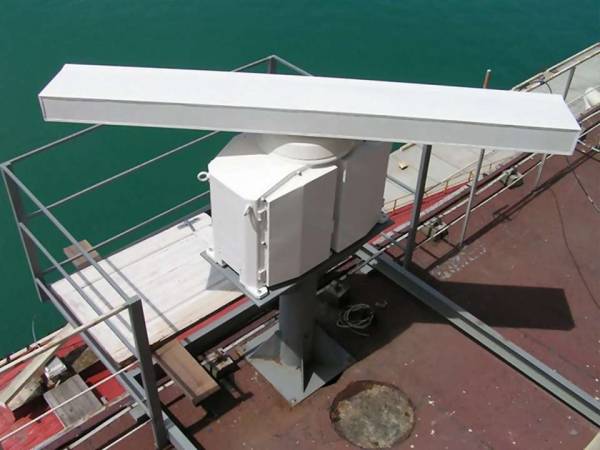
Mobile coastal radar station “Neva-B”.
According to technical classification, it is a millimeter-wave radar (Ka-band). The station is not a revolutionary secret development, but it meets modern requirements for coastal civilian and military monitoring thanks to its operating frequencies (around 33.85 GHz) and has high resolution: millimeter waves allow for clear visibility of even small objects on the sea surface. The radar can track a person in the water or on shore up to 2 km away, a boat or a light car up to 15 km, and detects large boats and trucks at a distance of up to 30 km. The instrumental range of the locator reaches 45 km.
The radar operates around the clock, automatically tracks dozens of targets simultaneously, and provides guidance for coastal missile systems and artillery. In the modern Russian coastal defense system, “Neva-B” and its modernized version “Neva-B2M” are among the basic means of controlling the waters of the Azov and Black Seas.
Of course, these are not strategic multi-million dollar radar systems like “Nebo-M,” which cost around $100 million each. The cost of such a tactical coastal millimeter-wave station usually ranges from tens or hundreds of thousands of US dollars, depending on the supply infrastructure. In the reports of the Defense Forces of Ukraine, the damage to the mentioned coastal radars, along with associated protective equipment, is estimated at cumulative amounts in the tens of millions of rubles, which in no way diminishes the importance of their destruction.
SEPARATE SPLITTING
A significantly “fatter” trophy for the Defense Forces was the specialized support vessel Project 1454, which joined the adherents of the cruiser “Moskva” near Mezhvodne in Crimea. This ship belonged to a rare series of auxiliary vessels of the Russian Black Sea Fleet. It housed unique equipment for degaussing (reducing the magnetic field) of Russian warships and submarines, which protected them from Ukrainian naval mines.
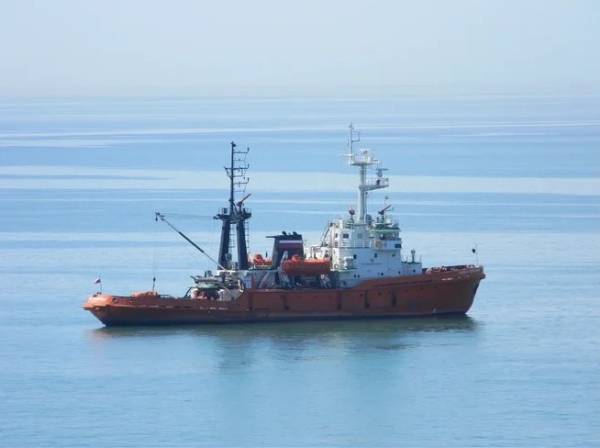
Specialized support vessel Project 1454
According to confirmed intelligence data and satellite imagery, the vessel sustained critical hull damage below the waterline and sank at its mooring near Mezhvodne. Given the depths in this area and the nature of the explosion damage, the ship completely lost its combat capability. Even if it were successfully raised from the bottom, the vessel would be irreparable, as its complex internal electronics and demagnetization generator systems were completely flooded with seawater.
For the Russians, this loss is essentially irreversible, as Turkey has closed the Bosphorus Strait to warships, making it impossible to transfer a similar demagnetizer from other fleets, at least until the end of the war.
As for the cost of the destroyed ship, for comparison, a similar Ukrainian civilian search and rescue vessel Project 1454 “Sapphire” (with identical characteristics: length about 58 meters and displacement of 1670 tons) cost UAH 165 million under state procurement, which was approximately USD 4 million at the commercial exchange rate. However, with the installed equipment for ship demagnetization, special generators, hydroacoustic systems, and communication systems, a military special tugboat is valued three times higher.
Since June, an aerial delegation from Ukraine visited Kronstadt and warmly greeted the guided missile weapon carrier, corvette “Boykiy,” Project 20380. The latter underwent scheduled repairs in a dry dock in February 2026; prior to that, it became widely known for ramming another Russian ship, the research vessel “Admiral Vladimirsky,” while docking.
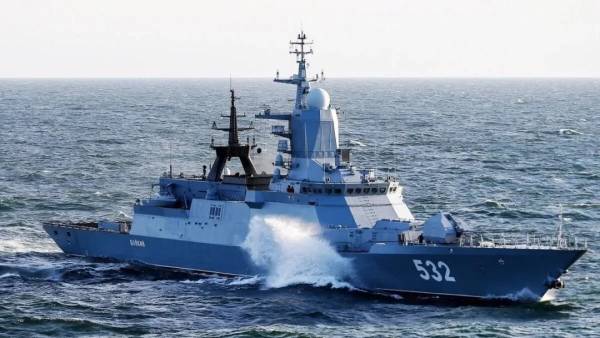
Corvette “Boykiy” Project 20380.
“Boykiy,” which is the third corvette of the Baltic Fleet, was launched on April 5, 2011, and officially commissioned into the BF in May 2013. A very recent target, it has long escorted sanctioned tankers of the Russian shadow fleet.
The cost of the Russian corvette at the time of its construction was about 10 billion rubles, which was approximately USD 300 million. As of 2021-2026, the market value of such a combat ship, considering inflation and armament modernization, is estimated at $350-400 million.
A massive fire inside the hull, metal deformation, and burnout of control systems, caused by the Ukrainian drone strike, have effectively turned the missile carrier into scrap, as restoration would cost almost as much as building a new corvette.
On the night of June 4, the Baltic Sea passed the baton to the Sea of Azov.
Near the settlement of Yurkine, not far from Kerch, a border patrol ship (PSKR) of the “Svetlyak” series, Project 10410, encountered some trouble.
A Ukrainian drone caught up with it right in motion. The strike hit the superstructure on the starboard side. At the moment of impact, a group of Russian sailors was on the deck on the side of the hit, trying to shoot at the drone, so these members of the Russian crew were guaranteed and fully deserved “tickets” to a concert by their favorite singer.
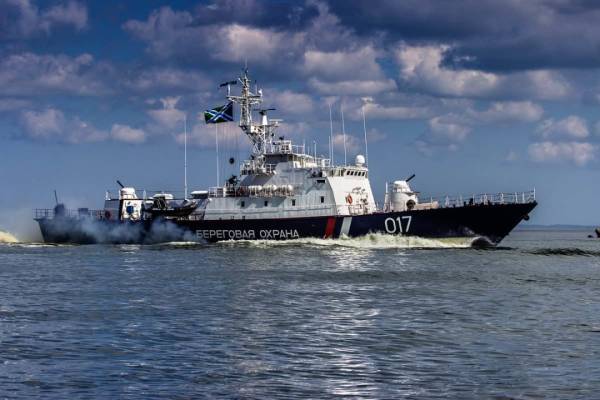
Border patrol ship (PSKR) of the “Svetlyak” series, Project 10410.
The cost of the hit patrol ship is currently estimated at USD 20-30 million, depending on the modification and year of construction.
It is known that the “Svetlyak” series is very mass-produced – over 40 such ships have been built since 1988. Their main feature is high speed (up to 30-32 knots), provided by three powerful diesel engines. These vessels are armed with an AK-176M automatic artillery mount (76.2 mm caliber) or AK-306 (30 mm), grenade launchers, and Igla MANPADS.
Russia actively sold modified versions of similar PSKRs for export. For example, in the early 2000s, Vietnam bought them for USD 15-20 million per ship.
“SOLID” LOGIC
On the same day, Ukrainian drones decided to fly not only over the sea but also to visit the occupied Crimean peninsula.
For some reason, the Russians were not happy with our drones, so they got offended and burned down the not-so-hospitable “Pantsir-S1” near Strelkovoye on the Arabat Spit, and then the RSBN-4N radio navigation system at the Saki airfield.
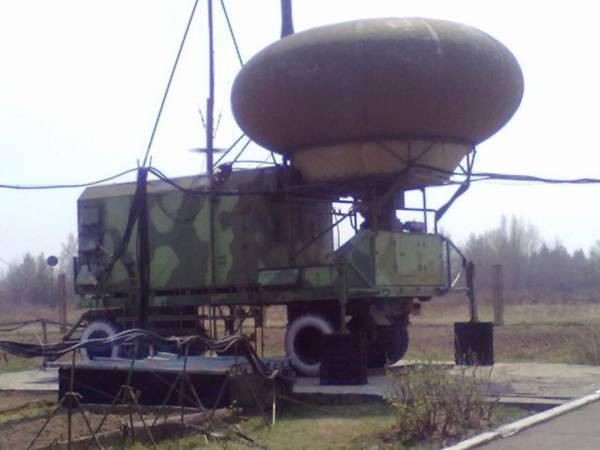
Radio navigation system RSBN-4N.
The latter provided approach for landing aircraft, flights in difficult weather conditions, and the operation of the military airfield in general.
From open registers of state procurement of airfield equipment, it is known that the supply of one new or capital repaired solid-state RSBN-4NM costs the Russians about 60 million rubles (approximately USD 650,000 – 700,000). This cost usually includes not only the hardware complex but also a set of antenna systems, cabling, remote indicators for the control tower, and commissioning work.
Greater troubles came to the Russians at the end of the first week of summer.
On the night of June 7, Ukrainian drones simultaneously struck one of the most expensive Russian air defense systems – the S-400 “Triumph” near Kurortnoye in Crimea and the OSA SAM system in the Zaporizhzhia region.
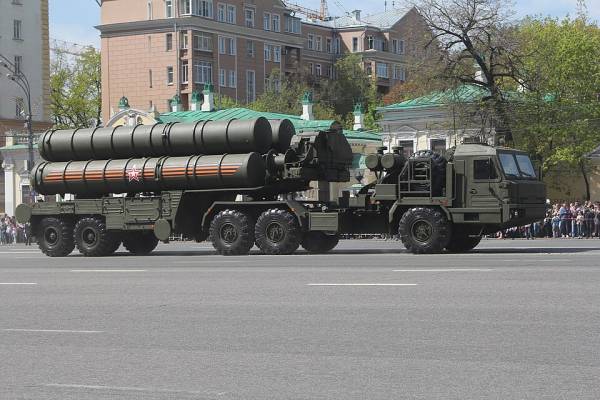
S-400 “Triumph” SAM system.While everything is more or less clear with the “Osa” – it is no longer a new short-range system – the S-400 anti-aircraft missile system is positioned by Russian propaganda as a true “wonder weapon” and is one of the main “solid” “analog-free” systems.
The Kremlin has been promoting it for decades as “the best in the world,” capable of shooting down any aerial targets at a distance of up to 400 kilometers. However, the war has repeatedly shown an interesting pattern: the more the Russians talk about the invincibility of their wonder weapons, the more regularly Ukrainian operators find their coordinates.
One battery of the S-400 SAM system costs the Russian budget several hundred million US dollars…
“TOR” IS NO LONGER “PANTSIR”
In April and May, the “Tor” family of SAM systems confidently held the lead in the “losers of the month” nomination, leading in the number of spectacular encounters with Ukrainian drones.
With the advent of summer, despite the Scandinavian family’s attempts to stay on the podium, other contenders broke this tradition.
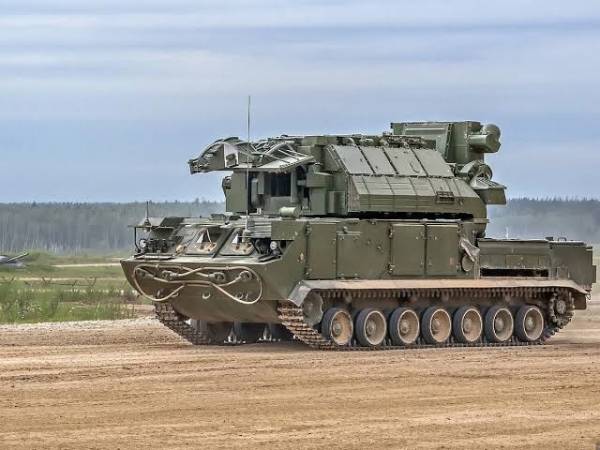
Tor-M2 SAM system.
On June 10, the first summer “Tor” dropped out of the race in the Verkhnya Drukha area, taking “Buk-M3” with it near Shevchenkove. Three days later, a second “Tor-M2” joined them. But that was all – this scrap metal did not fall into the sights of Ukrainian operators for the rest of the month.
Recall that the approximate cost of one “Tor-M2” complex is about $25-30 million.
“Buk-M3” is even more expensive; the self-propelled firing unit of this complex (9A317M PU) alone costs about $15-20 million. It is equipped with its own radar and can fight autonomously. On average, the price for a battery of “Buk” third modification ranges from $45-50 million.
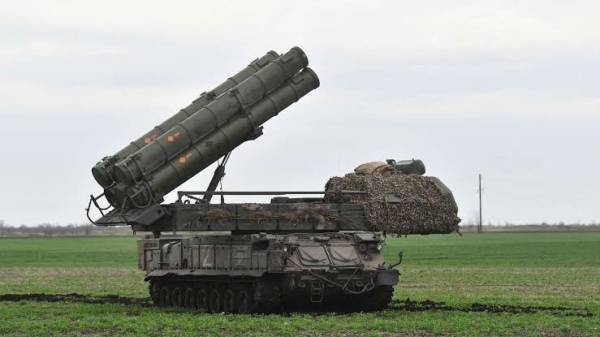
Buk-M3 SAM system.
This is one of the newest Russian medium-range systems, capable of simultaneously tracking dozens of aerial targets and engaging aircraft, cruise, and ballistic missiles. Instead of open launchers, the “Buk-M3” is equipped with launch containers with 9M317M missiles. These munitions have active homing heads and intercept targets at ranges up to 70 km and altitudes up to 35 km. The price of such a missile is from $300 to $500 thousand; there are six of them in the ammunition load of one self-propelled firing unit of the “Buk-M3”.
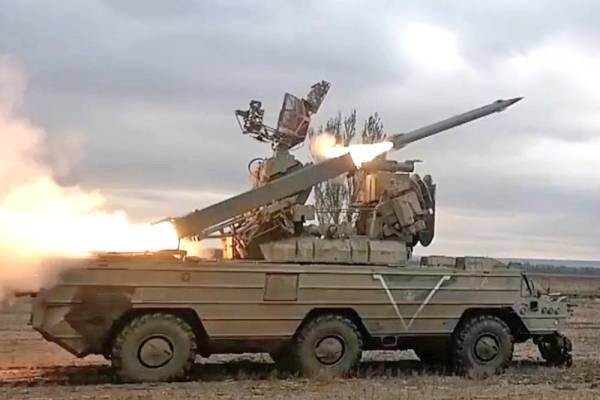
Osa SAM system.
By mid-month, another “Osa,” destroyed near Spartak in the Donetsk region, joined the ranks of Russian air defense casualties.
And the undisputed losers of the month, who won first place in the race for the “Moskva” cruiser with a significant lead over other contenders, were the short-range anti-aircraft missile and gun complexes (ZRPK) “Pantsir” of various modifications.
In addition to those destroyed at the beginning of the month, closer to the end of June, the statistics were replenished with a modernized “Pantsir-S2,” which GUR operators in the Dolynske area literally burned out of a camouflaged shelter, two ordinary “Pantsir-S1” near the Kerch Strait, and another similar complex in the Feodosia region, along with several elements of the S-400 system.
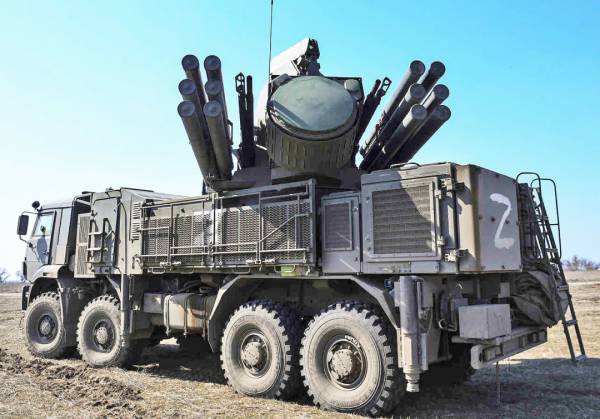
Pantsir-S2 ZRPK.
Interestingly, the Russians are already trying to hide some SAM systems underground. As we can see, this does not always help. But the very fact of building underground bunkers for mobile air defense systems is telling: Ukrainian unmanned aviation has become a deadly threat to them.
“GOYDA” FOR RADARS
In fact, June proved to be devastating primarily for the occupiers’ radar stations. Throughout the month, the Defense Forces destroyed 24 enemy radars, targeting them systematically, coolly, and ruthlessly.
Among the first to be hit were the old acquaintances of the readers of these reviews. On June 9, operators of the Unmanned Systems Forces sent two P-18 “Terek” radars in the Zaporizhzhia region to scrap almost simultaneously.
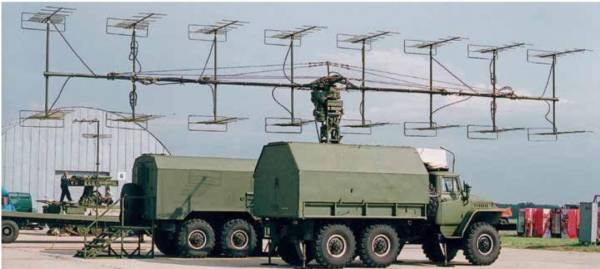
P-18 “Terek” radar.
Developed at the end of the 1960s, the P-18 station has been repeatedly modernized and remains relevant among Russian meter-wave radars, capable of detecting low-observable targets, including cruise missiles and aircraft with reduced effective scattering area. Russia understands the value of these veterans well, and so do Ukrainian operators. Therefore, on June 19, another P-18 followed its two predecessors, also in the Zaporizhzhia direction.
“Goyda” for Russian radio-technical assets also occurred in Crimea, where since mid-month, Ukrainian drones staged a total hunt for coastal radars. In just one night – from June 15 to 16 – five coastal radars located along the western coast of the peninsula along the line: Sterehushche – Snizhne – Tarkhankut – Portove – Severne came under attack by our drones.
The result of the operation was an almost continuous hundred-kilometer “blind zone” for Russian air defense in a key section of the Crimean coast.
After that, it was the turn of much more expensive systems.
On June 21, Ukrainian crews reported the destruction of two very serious radar systems at once – “Kasta-2E2” and “Nebo-U,” near Kurortnoye and Kerch, respectively.
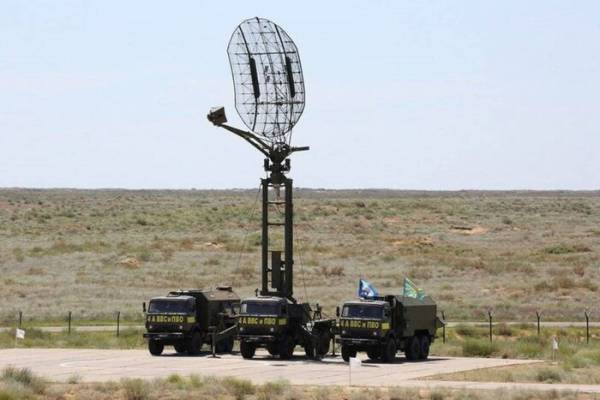
39N6 “Kasta-2E2” radar.
The mobile three-coordinate radar station 39N6 “Kasta-2E2” specializes in searching for low-altitude targets. Its cost, depending on the configuration and the presence of additional remote antenna masts (e.g., a 50-meter tower), is estimated at between $30 million and over $60 million.
But the most valuable trophy of June among the radars was the “Nebo-U” – a long-range three-coordinate strategic radar capable of controlling airspace up to 600 kilometers away. This locator operates in the meter band and is one of the key elements of the Russian early warning system, being the first to alert other air defense assets about dangers in the sky, detected aircraft, cruise, or ballistic missiles.
For the Defense Forces of Ukraine, such a target is worth $100 million, in the truest sense of the word. After all, this is how much the basic 55Zh6U “Nebo-U” radar costs in US dollars. The high price of the complex is due to its giant size, colossal power, and complex imported electronics inside. The stations are a unique and scarce product of the Russian military-industrial complex.
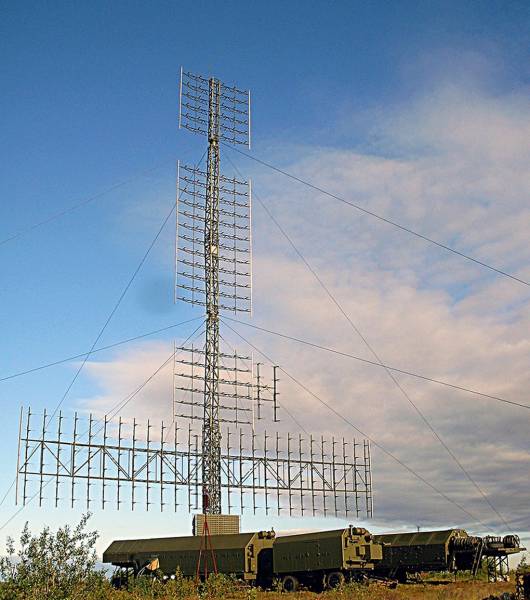
55Zh6U “Nebo-U” radar.
Two days later, fortune smiled on the Ukrainian operators again, and they destroyed another “Nebo-U” radar near Kerch, along with an S-300 SAM launcher and a “Pantsir-S1” ZRPK. The bonus of the day was an extremely valuable target – the TRLK-10 “Skala-M” tracking radar complex for dual (civilian-military) purposes.
This Russian device is one of the modern automated means of processing radar information, which effectively combines data from various sources into a single control system. Unlike mobile air defense radars, “Skala-M” is designed for strategic control of air traffic on routes and in approach zones at long distances. The complex can detect and determine the coordinates of aerial vehicles, aircraft, and large UAVs at distances of up to 350-400 km. Russian occupiers integrate civilian “Skala-M” systems into automated air defense control systems, using their data to issue target designations to combat aircraft and surface-to-air missile systems.
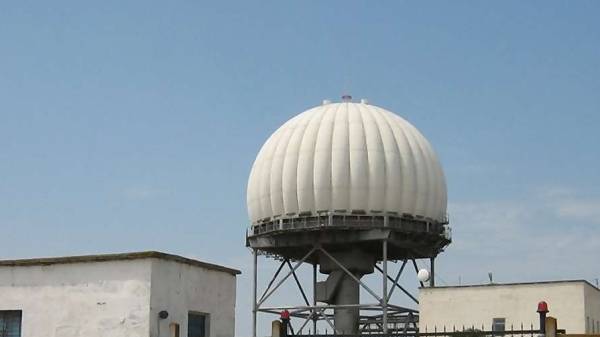
TRLK-10 “Skala-M”.
The cost of the stationary tracking radar complex TRLK-10 “Skala-M,” according to Russian state contracts, is about $15-20 million. The price is due to the specificity of the equipment: it is not a mobile system on a truck chassis but a stationary object. A significant portion of the cost goes into the construction of capital infrastructure, support towers, the hardware building, autonomous power supply systems, and a radome (protective antenna cover). In addition, the “Skala” electronics combine both a primary radar (for detecting reflected signals from physical objects) and a secondary “Koren” locator, designed to read flight data, which requires the connection of powerful computing resources. Although “Skala-M” costs less than purely military strategic radars like “Nebo-U,” its destruction is critical for the enemy. Russia has a limited number of such systems, and the process of their manufacturing, delivery, and capital installation at a new location takes months.
At the end of June, the list of Russian radar losses was added by the ST-68U near Dzhankoy and another ST-68 and the 48Ya6-K1 “Podlyot” radar near Yevpatoria, along with a “Pantsir-S1” in Feodosia.
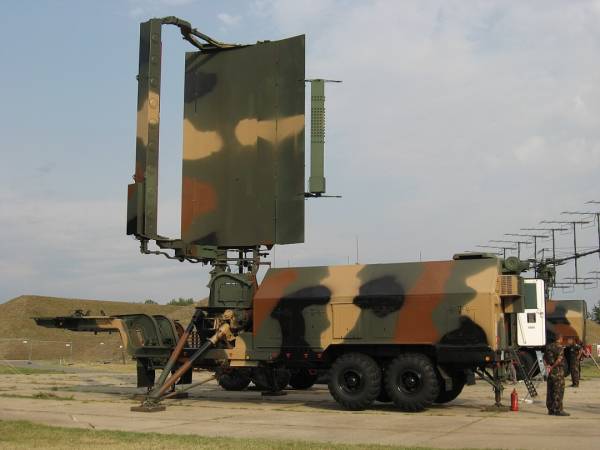
ST-68U radar.
Note: The market value of the Soviet/Russian three-coordinate radar station ST-68 (and its modernization ST-68U / 19Zh6, NATO classification – “Tin Shield”) on the international arms market is estimated at $4.5 to $7 million for a fully functional mobile complex. Despite its respectable age, this radar is a valuable trophy and an important target on the battlefield due to its unique technical capabilities. The ST-68 was created as a specialized low-altitude radar. Its main capability is to “see” complex targets flying extremely low over the ground, hiding in terrain folds.
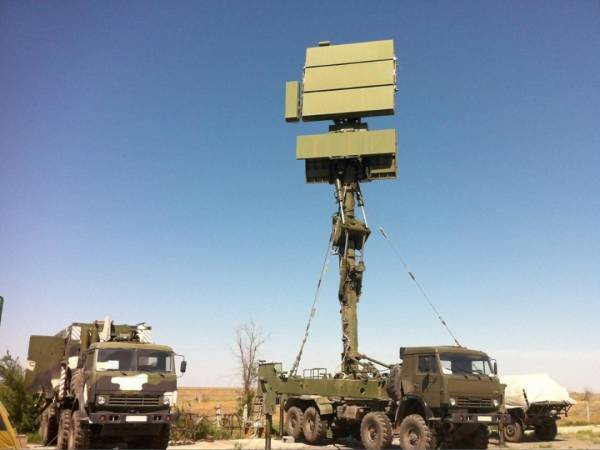
48Ya6-K1 “Podlyot” radar.
The “Podlyot,” which the Russians created to combat cruise missiles and drones, cost twice as much, up to $15 million. This scrap metal first came off the assembly line in the 2010s, and the creators of this latest “analog-free” system called the phased array antenna with circular scanning its main advantage, capable of detecting even a plastic drone with a small scattering area – a target that another radar might mistake for a flock of birds or radio interference from the terrain.
As it turned out, this “advantage” did not help much.
Ivan Stupak, Danylo Opanasenko
Illustrative photos from open sources
War War with Russia